Modernizing Supply Chain Verification with a Handheld Tracking Application
AdminNovember 4, 2026
0 Comments
Executive Summary
To improve dynamic inventory tracking across distilleries, depots, and vendors, the Client partnered with Cemetrix to engineer a handheld mobile application. This initiative replaced manual inventory methods with a digital tracking system that monitors liquor cases and individual bottles via 1D and 2D barcode scanning, drastically reducing pilferage across the supply chain.
The Challenge
Tracking the dynamic movement of sensitive stock across a vast network of government depots and vendors is highly prone to pilferage and manual data errors. The Client required a solution that could link field inventory units directly with a central database via rugged handheld terminal SDKs and WIFI-based communication protocols, ensuring real-time visibility and accountability at every transit stage.
Core Application Capabilities
Leveraging .NET CE 2.0 and the MT2090 Handheld Terminal, Cemetrix developed a comprehensive tracking application tailored for the Excise Department’s specific supply chain workflows.
Frictionless End-to-End Tracking: The system utilizes 1D case barcodes and 2D bottle barcodes to automate receiving and shipping workflows, featuring mandatory cross-checks at every destination point.
Integrated Access & Damage Control: The application includes role-based login and granular access controls based on user permissions, alongside built-in damage detection and replacement processing modules.
The deployment of rugged handheld terminals connected via WIFI-based protocols enabled real-time inventory tracking and streamlined supply chain verification across all active distribution nodes.
By digitizing and automating the inventory verification process, this handheld mobile application significantly modernized the Client’s supply chain management. The real-time tracking of 1D and 2D barcodes successfully reduced pilferage and ensured highly accurate stock movement records across distilleries, depots, and vendors.
Financial Services
Credit Card Payment Tool
AdminNovember 4, 2026
0 Comments
Executive Summary
Institutional financial operations often face the challenge of securely processing mobile transactions without compromising auditability or banking-grade compliance. Wells Fargo required a reliable mobile solution with rigid security protocols and streamlined UI flows that could seamlessly integrate with existing payment gateways while meeting stringent banking grade requirements for mobile devices.
Core Application Capabilities
Leveraging deep expertise in iOS development, Cemetrix implemented a secure mobile architecture tailored specifically for Wells Fargo’s institutional needs, utilizing Cocoa Touch and the iPhone SDK (Objective-C).
Frictionless Transaction Processing: The tool provides an end-to-end secure transaction processing architecture, enabling real-time authorization routing directly through an integrated payment gateway.
Integrated Auditing & Compliance: The application features comprehensive success and error transaction logging to ensure complete auditability for all financial operations.
The successful delivery of this fully integrated POS processing and terminal management ecosystem empowered Citiserve to handle secure multi-brand card payments, mobile top-ups, and bill payments at scale.
By deploying this specialized mobile credit card payment tool, Wells Fargo successfully modernized its mobile financial operations. The end-to-end secure architecture ensured high precision and security, enabling seamless real-time authorization and reliable transaction logging for complete operational auditability.
Transforming the Apple Retail Experience with a Mobile-First POS System
AdminSeptember 22, 2026
0 Comments
Executive Summary
To redefine the in-store customer journey and eliminate checkout bottlenecks, Apple Inc. (Apple IS&T) partnered with Cemetrix to replace traditional, fixed Point of Sale (POS) stations with a dynamic, mobile-first ecosystem. This initiative delivered a highly secure, iOS-native POS application that empowers retail sales associates to manage the entire sales lifecycle—from merchandise scanning to final payment—directly from the shop floor, radically transforming the global Apple retail experience.
Apple required a solution that matched its brand ethos: seamless, innovative, and customer-centric.
The Challenge
Legacy retail environments often rely on stationary checkout counters, creating physical barriers between sales associates and customers while contributing to long wait times during peak hours. Apple required a solution that matched its brand ethos: seamless, innovative, and customer-centric. The objective was to untether staff from fixed registers and provide a robust, secure mobile tool capable of handling complex transactions, real-time inventory management, and diverse global payment methods across a massive international footprint.
Leveraging deep expertise in iOS development, Cemetrix engineered a comprehensive mobile POS application tailored specifically for Apple’s in-store associates. Built natively using Objective-C, Cocoa Touch, and the iPhone SDK, the application integrates seamlessly with the proprietary IS&T Framework to ensure peak performance and enterprise-grade security.
This mobile application completely replaced Apple’s legacy in-store POS system, equipping associates with the tools needed to assist customers anywhere in the store.
Core Application Capabilities
Frictionless End-to-End Checkout: Associates can scan merchandise directly on the shop floor, process the transaction, and complete the sale without ever routing the customer to a traditional register.
Integrated Payment & Receipting: The system supports secure, integrated card-swipe hardware for multiple payment options. Upon transaction completion, the application automatically generates and sends digital email receipts to the customer.
Advanced Inventory & Returns Management: Beyond simple sales, the application provides real-time inventory tracking, allowing associates to check stock levels instantly. It also supports complete merchandise returns directly through the mobile interface.
App Store Availability: The polished, enterprise-ready application was successfully published and made available on the App Store for streamlined deployment to retail devices.
The transition to a mobile POS infrastructure revolutionized how Apple stores operate on a global scale. Cemetrix successfully rolled out the secure solution across three continents—North America, Europe, and Asia—standardizing the retail experience worldwide.
By decentralizing the checkout process, the mobile-first POS system drastically reduced customer wait times, optimized store floor space previously occupied by physical registers, and enabled associates to provide uninterrupted, personalized service. The robust architecture ensures that localized payment preferences and strict security standards are met across diverse international markets, solidifying Apple’s position at the forefront of retail innovation.
Bill payment POS solution
E-Tranzact)
EFT-POS terminal application
ISO 8583 transaction processing
Mastercard
Mobile top-up POS system
Payment Solution
POS
POS gateway server
POS management server
Retail
Retail POS solution
Retail technology case study
Secure card payments (Visa
Verve
Retail POS Payment Solution
AdminSeptember 19, 2026
0 Comments
Executive Summary
In the rapidly evolving retail sector, secure, fast, and reliable transaction processing is paramount. The client partnered with Cemetrix to design and develop a comprehensive Retail Point-of-Sale (POS) payment solution. By integrating robust server-side architecture with highly secure client-side terminal software, Cemetrix delivered an end-to-end ecosystem that handles administrative management, seamless transaction routing, and secure multi-card payments.
The Challenge
The client required a highly scalable, secure, and unified payment infrastructure capable of managing widespread retail POS terminals. The solution needed to support a variety of chip-enabled debit cards (including Mastercard, Visa, Verve, and E-Tranzact) while facilitating not just standard purchases, but also value-added services like mobile top-ups and bill payments. Furthermore, the system had to comply with strict financial security standards (EMV and PCI DSS) and provide real-time administrative oversight for merchants and administrators.
A multi-tiered architecture that seamlessly connects the physical checkout experience with powerful backend processing
The Cemetrix Solution
The solution is divided into three core operational pillars:
1. POS Management Server
Built on ASP.NET and powered by a robust SQL Server database, this centralized hub acts as the brain of the administrative operations.
Merchant & Terminal Administration: Enables complete lifecycle management of terminals and merchant accounts.
Granular Reporting: Provides extensive insights into terminal status, merchant hierarchies, and transaction summaries. Administrators can easily generate automated settlement reports on a weekly, monthly, or yearly basis.
2. POS Gateway Server
Acting as the critical middleware for financial routing, the Gateway Server formats and transmits transactional data.
Standardized Communication: Strictly adheres to ISO 8583 standards, ensuring flawless interoperability with various financial institutions, banks, and payment switches.
3. EFT-POS Payment Terminal Application
Developed using C and the ARM Processor Device SDK, the client-side application runs directly on the physical POS devices.
Versatile Payment Processing: Fully supports EMV-compliant chip-enabled debit cards for standard retail purchases.
Value-Added Services: Extends beyond basic transactions by enabling on-the-spot mobile airtime top-ups and utility bill payments.
Automated Receipt Generation: Instantly prints customized customer and merchant receipt vouchers upon transaction completion.
Not long ago, expanding operations overseas was viewed through a single, narrow lens: cost reduction. Companies moved back-office tasks across borders to optimize their bottom lines. Fast forward to 2026, and that paradigm has completely shattered.
Today, enterprise leaders aren’t just looking to save money—they are in a relentless race for elite technical talent, accelerated time-to-market, and continuous digital innovation. Enter the modern Global Capability Center (GCC).
No longer just a “captive offshore unit,” the 2026 GCC is a high-octane engine for enterprise growth. For businesses looking to scale their IT and operational infrastructure, establishing a GCC is now a competitive necessity. Here is why 2026 is the tipping point for global capability expansion.
The Global Race for AI and Advanced Tech Talent
As artificial intelligence, cloud architecture, and automation become deeply embedded in core business processes, the demand for specialized IT talent has vastly outpaced local supply in traditional tech hubs. Relying solely on local hiring in highly competitive markets stifles growth and inflates payrolls.
A strategic GCC allows you to tap into rich, global talent ecosystems. By setting up a footprint in emerging tech capitals, businesses can pipeline top-tier software engineers, data scientists, and cybersecurity experts who are ready to build the next generation of your products.
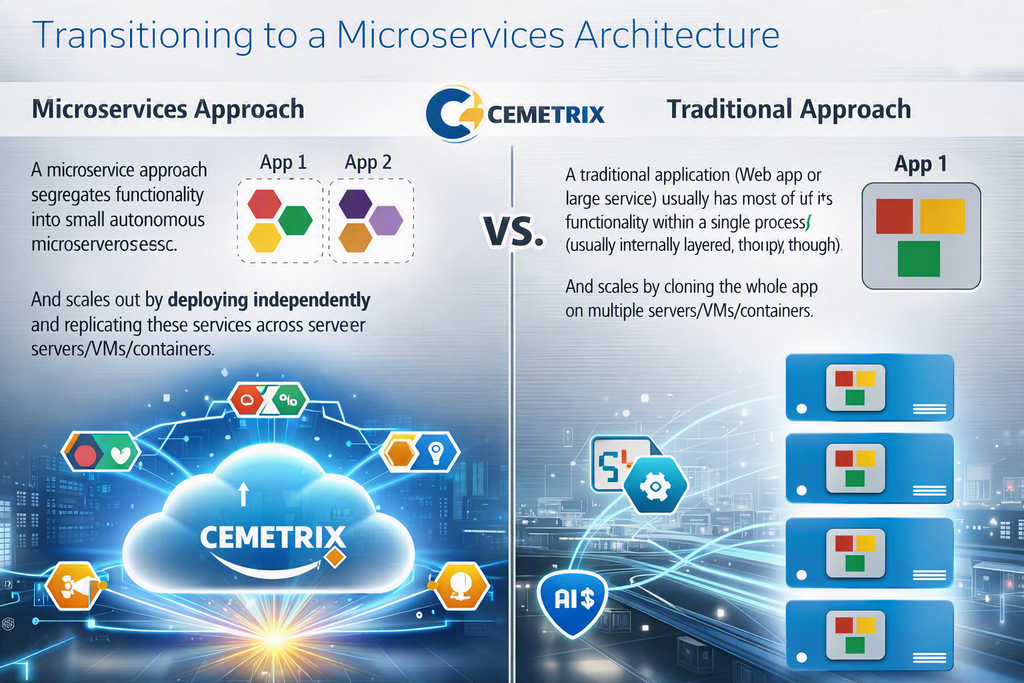
In any Engineering organisation, as the underlying business hits scale, as the number of team members grow, as the team drives towards operational excellence, transitioning to a microservices architecture seems inevitable. While the benefits of microservices architecture are common knowledge, it also comes with its unique set of challenges and complexities. When moving to microservices, the how and when can play a critical role in ensuring a smooth transition. In this talk, We will discuss some best practices in designing microservices and discuss out journey of transitioning to a microservices architecture.
Germany ICT Market — 2026 Overview
Germany’s ICT market reaches USD 213.49 billion in 2026, growing at a CAGR of 8.79%. Discover how Cemetrix — a multinational IT firm with EU presence — delivers ICT managed services, engineering, and staffing solutions to German and European enterprises.
Germany is Europe’s largest economy and one of the world’s most significant ICT markets. The Germany ICT market is valued at USD 213.49 billion in 2026 and is growing at a CAGR of 8.79% to reach USD 325.29 billion by 2031. Enterprise digitalisation, sovereign-cloud adoption, and accelerated AI rollouts are the structural forces driving this trajectory.
The IT services segment — covering consulting, integration, and managed services — is even more dynamic. The Germany IT Services market is valued at USD 86.43 billion in 2026, with managed security services forecast to expand at a 12.22% CAGR through 2031.
Let's Talk
Fill out the form below and our team will get back to you shortly.